


Write by Gilberto Pulgarin in collaboration with Mónica Arboleda

Have you ever wondered about the relationship between coffee and our spirituality? What connection might this beverage have with our spiritual development, and how are they linked?
Since coffee was discovered as a beverage for human consumption, it has been associated with religion, so to speak. Legend has it that in a mountainous region of Ethiopia, where coffee was discovered by a shepherd named Caldi, he noticed his goats becoming restless after eating the red berries and branches of a bush near where his flocks grazed.
He saw that their behavior was unusual; some were jumping and acting very actively, even walking on two legs. He set about collecting some of the berries and parts of the bush to take to a nearby monastery. These elements would later be analyzed by the monks, leading to what would become one of humanity’s greatest discoveries: the coffee beverage.
How was the spirit of coffee recognized?
It wasn’t as simple as it sounds. After many trials with the elements brought by the pastor, the monks found nothing pleasant; moreover, it was a bitter and unpleasant-tasting drink. So, without warning, they threw the remains of these trials into the fire, and after several minutes, its essence began to emerge in the form of a pleasant and strong fragrance. Therefore, they decided to grind the roasted beans and make an infusion, giving rise to the second most consumed beverage in the world, after water: coffee.
Did coffee strengthen the spiritual connection?

To their surprise, it was a beverage that helped them concentrate more during their prayers and remain more lucid until late into the night. Undoubtedly, it became the perfect companion for monasteries and religious orders in their spiritual pursuits, where they needed to keep their minds alert and allow communion with the divine.
Later, its use spread to regions like Yemen via trade routes, where Sufi monks adopted it as part of their ceremonies, using it for their long nights of prayer and spiritual rituals.
This is how coffee definitively encouraged, awakened, and comforted the spirit of those who consumed it.
Coffee as a spiritual companion.

From its beginnings, coffee became a staple in places where it was necessary to stay awake for extended periods, for moments of meditation, long hours of physical work, and spiritual connection.
While coffee isn’t mentioned in the Bible, its effect on alertness is a recurring theme; in Matthew 26:41: “Be on your guard and pray so that you will not fall into temptation. The spirit is willing, but the flesh is weak.” Coffee could very well have helped keep the mind alert for prayer and connection with God.
But coffee wasn’t all love at first; it was also controversial. It sparked a new way of relating to others and opened minds to participate in the Enlightenment, revolutions, and discoveries, to such an extent that it was banned in Mecca and other regions of the Islamic world. It was called the wine of Islam, which led to its popularity, but also to its controversial nature.
The journey of coffee through different religious currents
In the 16th century, the Ottoman Empire viewed it with suspicion. The coffeehouses where people gathered to talk and converse were also places where rebellions erupted and the voices of those dissatisfied with the way the government was run were raised, so it was banned to prevent social unrest.
By the 17th century, what was forbidden in the East had reached Europe (Italy), where it was received as a great revolution.
The beginnings of coffee in the church
Some clergymen viewed it with skepticism, considering it a diabolical and dangerous invention; but others, like Pope Clement VIII, after tasting the beverage, declared that its flavor was so exquisite that it should be sanctioned and accepted by the Church so that everyone could enjoy such a marvelous drink, not only the devil and sinners of the time, but all the faithful. A wise decision for future coffee lovers.
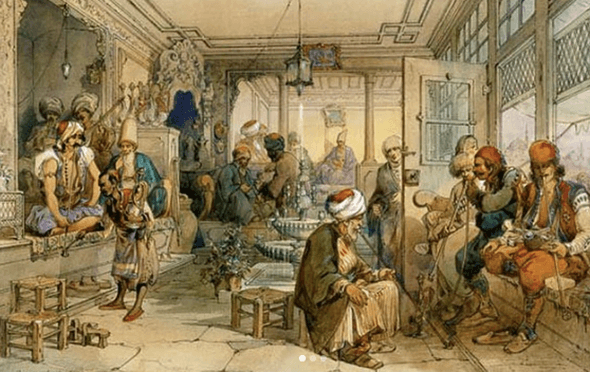
Fuente: Imagen tomada de google, 2026
“The Puritans were one of the few religious groups that quickly embraced coffee. In England, the Puritans had long protested against the widespread consumption of beer, which they believed led consumers to sin and lust. In cities, beer was long considered the only source of hydration, as obtaining clean drinking water was very difficult.” Therefore, the arrival of coffee in the various cafes where people gathered to discuss history, philosophy, and other topics was seen as a major victory for the anti-alcohol activists of the time.
Coffee at meetings and meditations

Author James Howell highlighted the virtues of coffee, the most important for history being its role in fostering more sober societies. As journalist and historian Valorie noted, the first drink of the morning was often beer or wine, leading to a day filled with decisions made under the influence of alcohol, clouding judgment and resulting in poor business decisions that have gone down in history.
In this way, coffee became part of people’s daily lives and all the most important events in history. It accompanied popes, kings, generals, and slaves, giving them a sip of hope and strength to carry on. Some believe the beverage has spiritual effects, such as transporting them to other dimensions and connecting them with beings from other realms. While other beverages are known to have these properties in different cultures, coffee keeps its consumers active and lucid during moments of meditation and long hours of prayer, creating an almost sublime connection to calm and develop the spirit.
¿Did you find this information helpful? Let Us know.
WhatsApp USA +1 (689)7102484 – Colombia +57 3128666453
Sources:
• When Coffee Becomes A Religious Experience by Valorie Clark, Sprudge Special Projects Desk.
• God Caffeinated His World: Coffee, Tea, and Soda to the Glory of Christ by David Mathis, Desiring God.
• J. Howell, Coffee and Faith: A Cultural and Spiritual Exploration of the Beverage That Changed Europe. 2024.