
DIFFERENCE BETWEEN A SEAL AND CERTIFICATION
Escrito por: Gilberto Antonio Pulgarín Marín, 2025. USA. En colaboración con Mónica P. Arboleda M.
Why are seals important and what are they for? Is certification the same thing? Many consumers and producers ask themselves this question: is it worth the effort to pay for, implement, and decide to have them on coffee brands?
Seals are small logos of various shapes, colors, and sizes that are printed on coffee packaging, both on the front and back, specifying that the coffee meets certain characteristics according to the seal it represents. For these seals to be recognized and valid, and for their standards to be verifiable, they must be recognized in the country where the coffee is grown and sold. They can be national or international, depending on their scope.
Generally, they must be issued by recognized and registered companies that attest to compliance with the standards in a neutral manner and without any ties to the producers or certified companies, thus ensuring the impartiality of the seal. In some cases, such as Starbucks CAFÉ Practices and Nespresso AAA, these are seals issued by private companies.
What does it mean to certify your coffee brand?
Certification is the process a producer must undergo to demonstrate that their coffee is different from others on the market, competing with various consumers. The traceability of coffee production is verified from planting to processing and consumption in different markets worldwide. Unfortunately, coffee is not paid a premium price, even though more than 40% of the world’s coffee has undergone some form of certification or quality seal.
https://quecafe.info/certificacion-de-cafe-que-significa-el-sello-que-lleva-tu-cafe/.
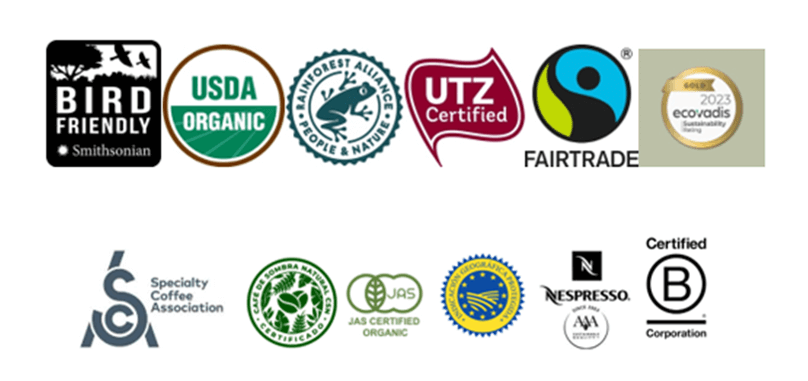
ENVIRONMENTAL SEALS for coffee certification
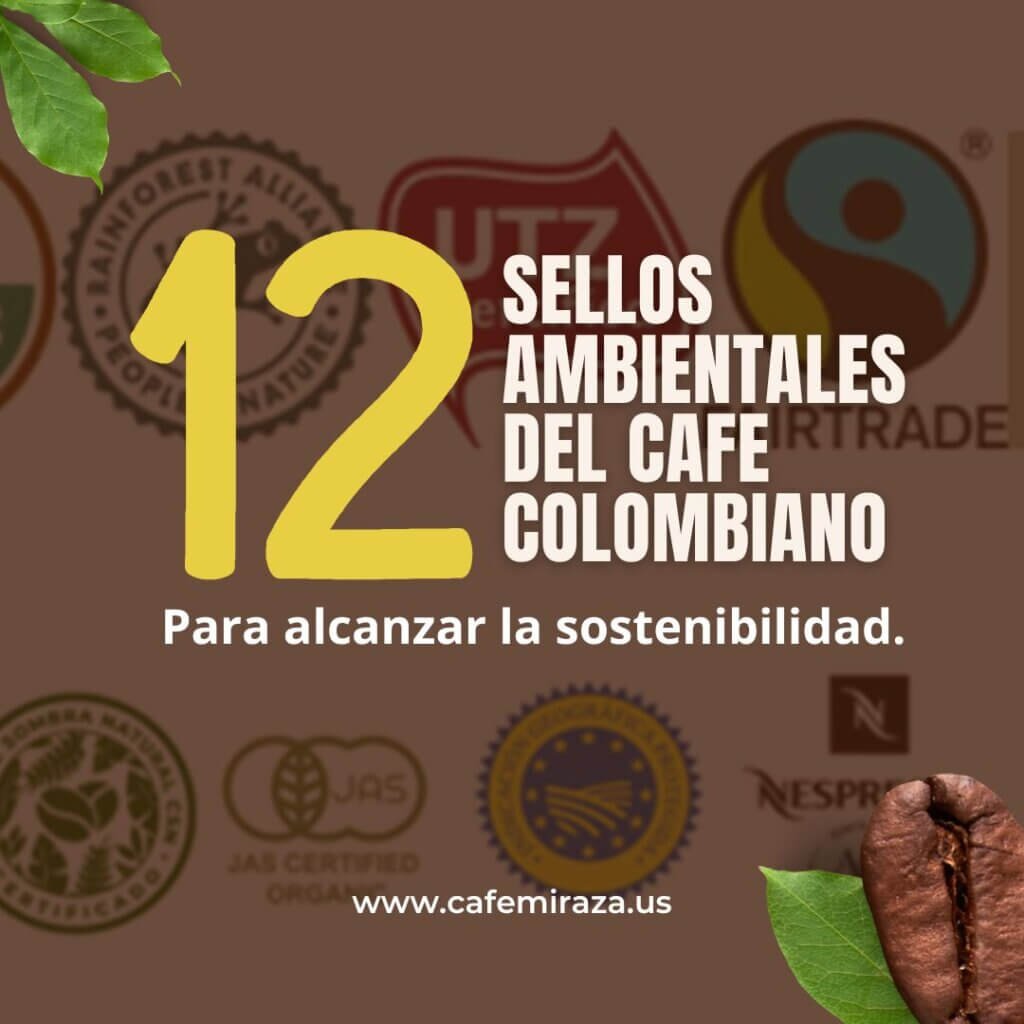
1. Bird Friendly. Smithsonian: Bird-friendly.
2. USDA ORGANIC: Production under organic farming practices.
3. Rainforest Alliance: Environmental conservation, social well-being, and economic viability; it seeks to help farmers improve their standard of living and protect natural resources and biodiversity.
4. UTZ: Sustainable production and decent living conditions for workers.
5. JAS: Organic for Japan. Certification for selling organic products to Japan.
6. FAIRTRADE: Guarantees that the producer receives a fair price for their product.
7. Protected Designation of Origin (PDO) or Protected Geographical Indication (PGI) labels: A legal mechanism that guarantees to the consumer that a product comes from a specific geographical region and that, furthermore, that product possesses its own distinctive quality characteristics when compared to other similar products on the market.
8. ECOVADIS Certification: Environment, labor practices, and human rights. Supply chain and good governance.
9. B Corp Certification: social and environmental performance, public transparency, and legal accountability.
10. AAA Quality Program created by Nespresso and the Rainforest Alliance.
11. Shade-grown coffee certification: guarantees that the coffee is produced under the tree canopy, supporting biodiversity.
12. Specialty Coffee Association (SCA) certification: They offer various programs that promote specialty coffee production. https://www.gourmesso.com/blogs
Source: Google Images, 2025.
¿How to use seals on export coffee sacks?
Another frequently asked question is how to use the seals on export coffee sacks. These seals are generally used by large companies, but in this new wave of specialty coffees, many producers are venturing into this market and need to know the correct way to do it:
Since 1960, when the quota agreement was still in place, the ICO established a coding system to identify the origin and provenance of coffee. This system consists of eleven (11) numbers: the first three (3) indicate the country of origin, the next four (4) the exporter, and the final four (4) identify the shipment to which the sack belongs. Example: 003-0001-4950.
003 Country: Colombia
0001 Exporter: Almacafe-FNC
4950 is the shipment code for the coffee sacks being exported. https://federaciondecafeteros.org/app/uploads/2022/08/INSTRUCTIVO-EXPORTACIONES-GRANDES-CANTIDADES-PORTAL-CAFETERO.pdf
¿HOW THE MONEY FROM CERTIFICATION STAMPS REACHES PRODUCERS’ POCKETS?
This could be the key for certifications to become part of the long-term sustainability of coffee farming. A producer who makes extra efforts to produce in harmony with the environment and who ensures that the other steps in the chain, all the way to the final consumer, protect and guarantee environmental care, should receive a direct benefit for their efforts.
Currently, each certification represents additional income that, in some cases, does not justify the work involved in implementing all the practices required by the certification. That is why many marketing companies and coffee roasting and processing companies return part of their profits to producers for implementing these certifications.
In some certifications, the producer can receive about USD 03/pound of dry parchment coffee at the purchasing points where these types of agreements exist. However, these also retain part of those incentives to pay for logistical processes.
Did you find this information helpful? Let us know in the comments.